Avant‑Garde
Wine&Spirits
New York  ·  Est. 2011
Our
Producers
We choose producers for the integrity of their work, from vineyard to cellar.
Champagne
Montagne de Reims
Emmanuel Brochet
→
Côte des Bar
Vouette & Sorbée
→
Vallée de la Marne
Laurent Bénard
→
Vallée de la Marne
Delalot
→
Côte des Bar
Thomas de Marne
→
Vallée de la Marne
Maison Jérôme Lefèvre
→
Alsace
Haut-Rhin
Valentin Zusslin
→
Haut-Rhin
La Grange de l'Oncle Charles
→
Beaujolais
Brouilly
Domaine Aux Ardents
→
Bordeaux
Haut-Médoc
Domaine Uchida
→
Burgundy
Côte d’Or
Pierre-Henri Rougeot
→
Jura
Le Revermont
Les Coteaux du Val de Sorne
→
Arbois
Domaine La Patelle
→
Loire Valley
Anjou
Benoît Courault
→
Sancerre
Paul Cherrier
→
Saumur
La Porte Saint Jean
→
Anjou · Layon
Les Grandes Vignes
→
Chinon
Domaine des Frères
→
Touraine
Domaine du Chapitre
→
Provence
Les Baux-de-Provence
Domaine Milan
→
Rhône Valley
Rasteau
Gourt de Mautens
→
South West
Côtes de Duras
Mouthes le Bihan
→
Italy
Greve, Tuscany
Tenuta La Novella
→
Gussago · Lombardia
Nicola Gatta
→
Spain
Alella · Catalunya
Art Laieta
→
Alella · Catalunya
Celler de Les Aus
→
Rías Baixas, Galicia
Fento
→
United States
Finger Lakes, New York
Nathan K.
→
Finger Lakes, New York
chëpìka
→
Central Coast · California
Outward Wines
→
Client Portal
NY Wholesale Portfolio
NY Wholesale Catalog & Pricing
Avant‑Garde Wine & Spirits — For trade use only

Pricing and availability subject to change. Contact Geoffroy with any questions.

Distribution
Find Our
Wines.

Our portfolio is available through select distributors across the United States. Reach out to find coverage in your market.

Availability by Market
New York  ·  New Jersey  ·  California
Direct — Avant‑Garde Wine & Spirits
Texas
Mayfield Selection
Florida
DF Rosati
Georgia
Rive-Gauche
Connecticut
Ungrafted Selections
Massachusetts
Areni Selections
Oregon  ·  Washington
Chausse Selections
Other markets
Avant‑Garde Wine & Spirits
Get in
Touch.
Phone
646.642.3386
Message
New Accounts
Become a
Customer.

We work with restaurants, wine bars, independent retailers and distributors throughout the US. If you'd like to open an account, we'd love to hear from you.

Champagne · France

Emmanuel Brochet

Montagne de Reims · Villers-aux-Nœuds
The Estate
AppellationChampagne
GrapesPinot Meunier, Pinot Noir, Chardonnay
Surface2.5 ha
Production7,000 bottles
FarmingCertified Organic
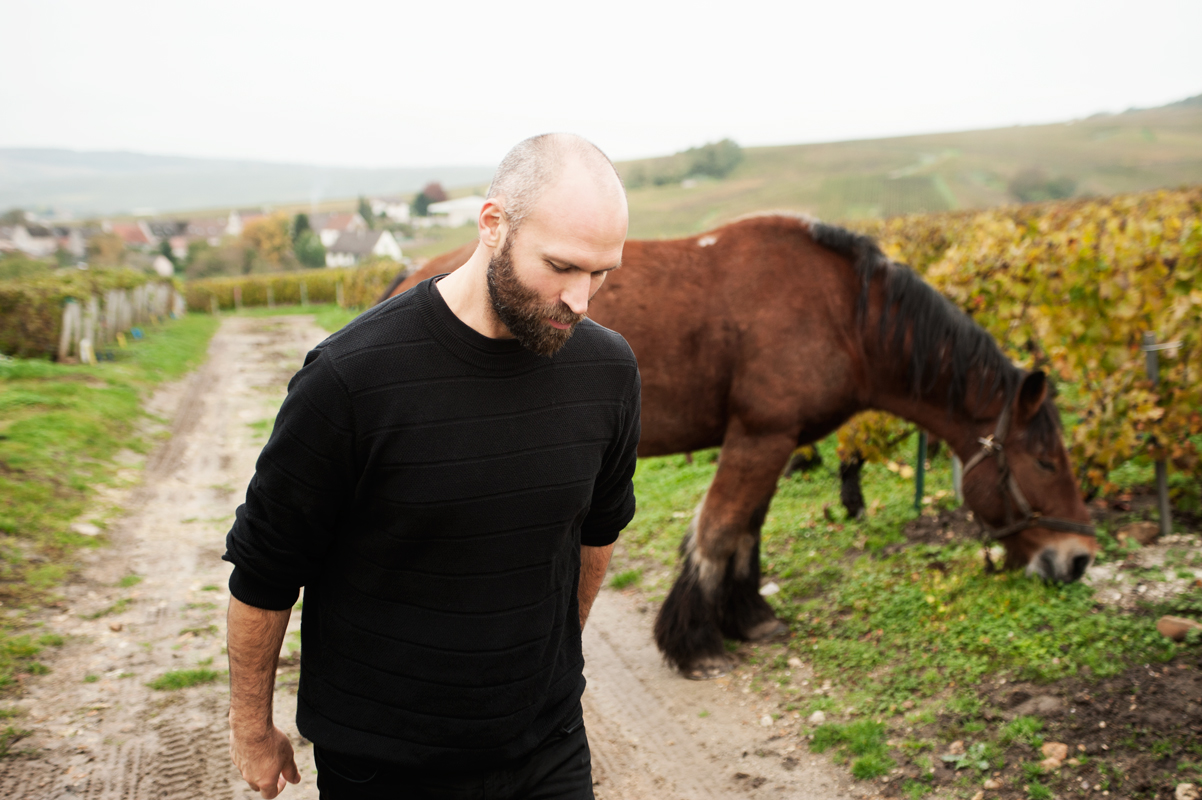
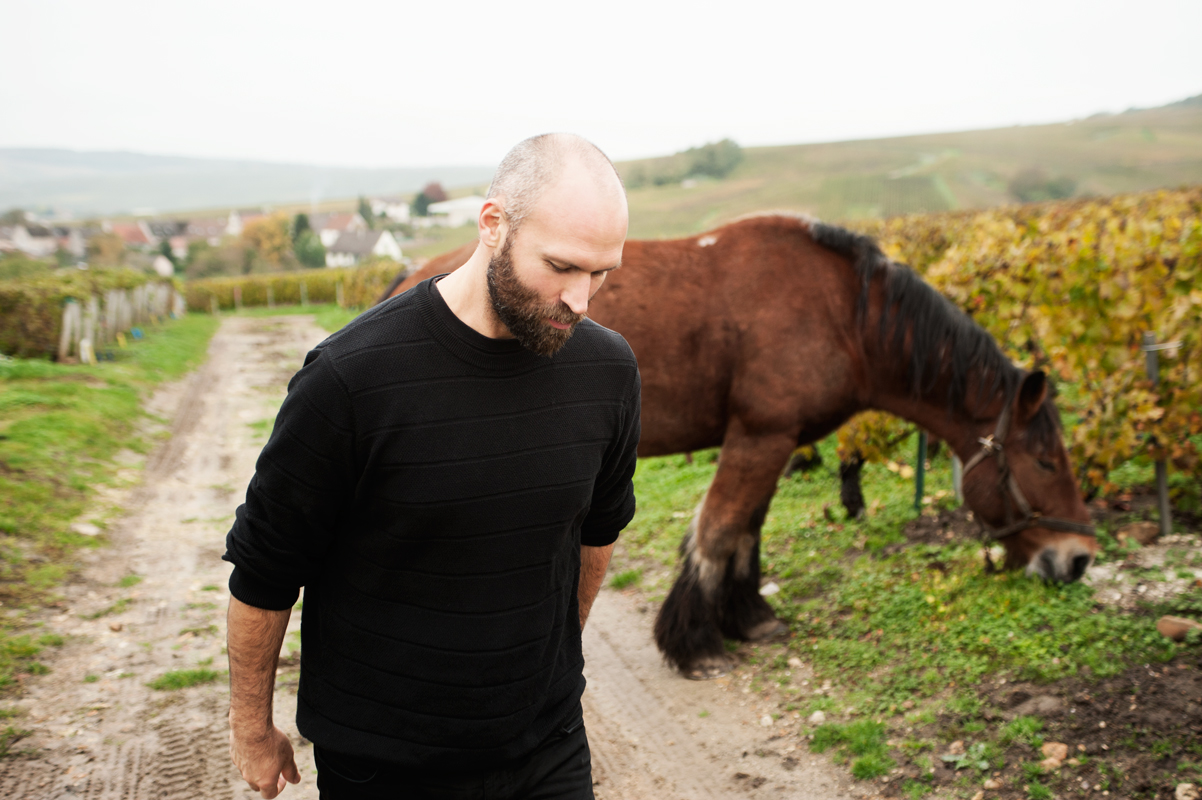
emmanuelbrochet vineyard

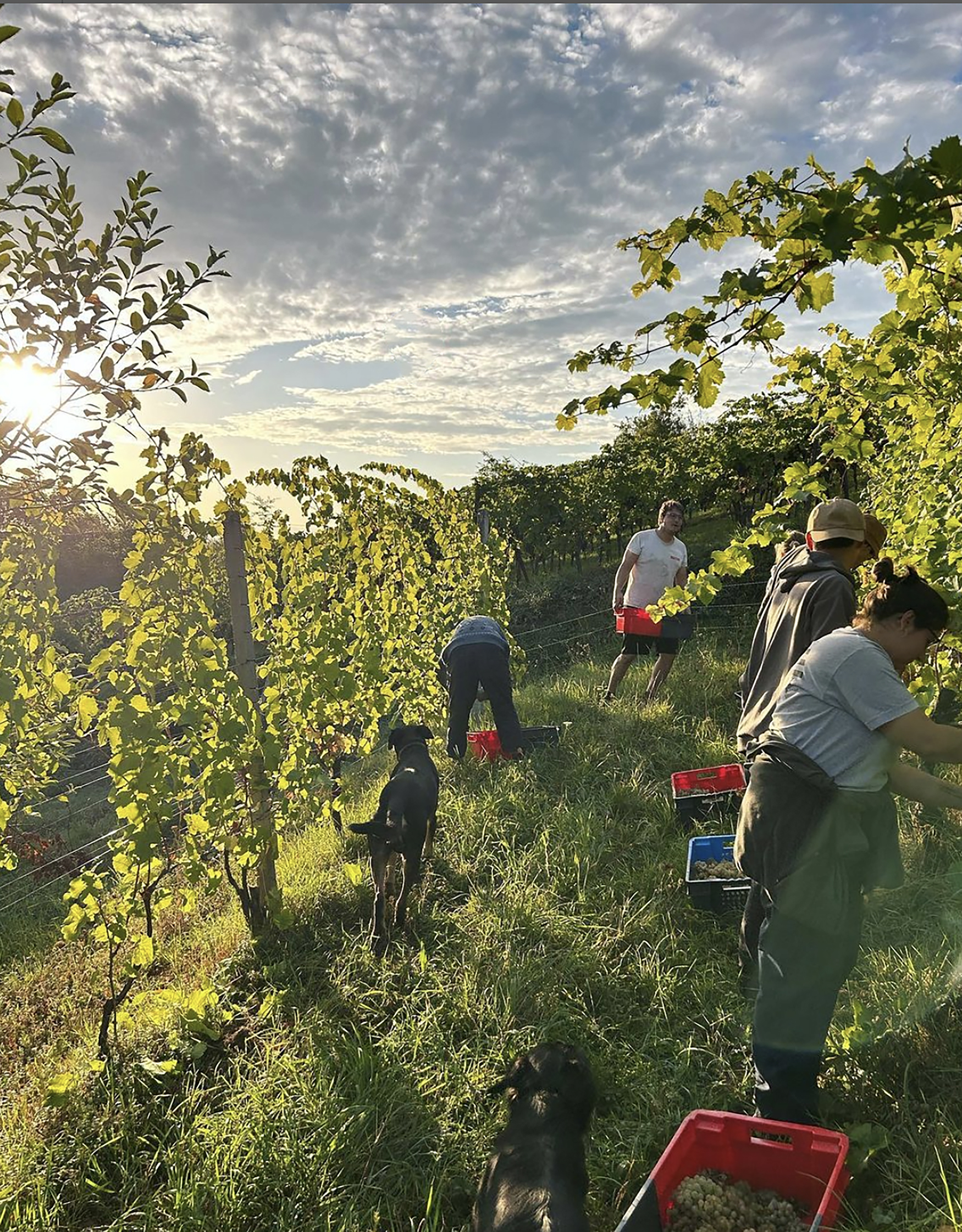
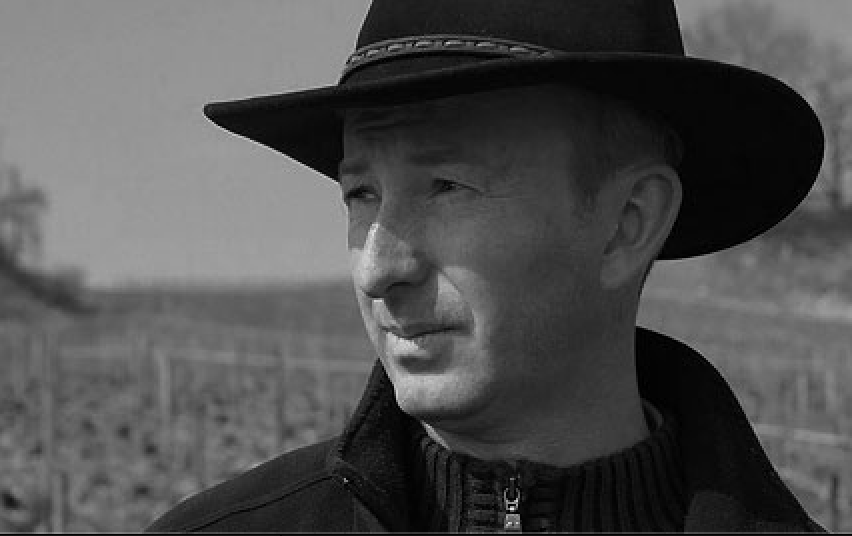
Emmanuel’s unflinching passion for the craft of winemaking began in 1997 as a first generation Champagne grower.

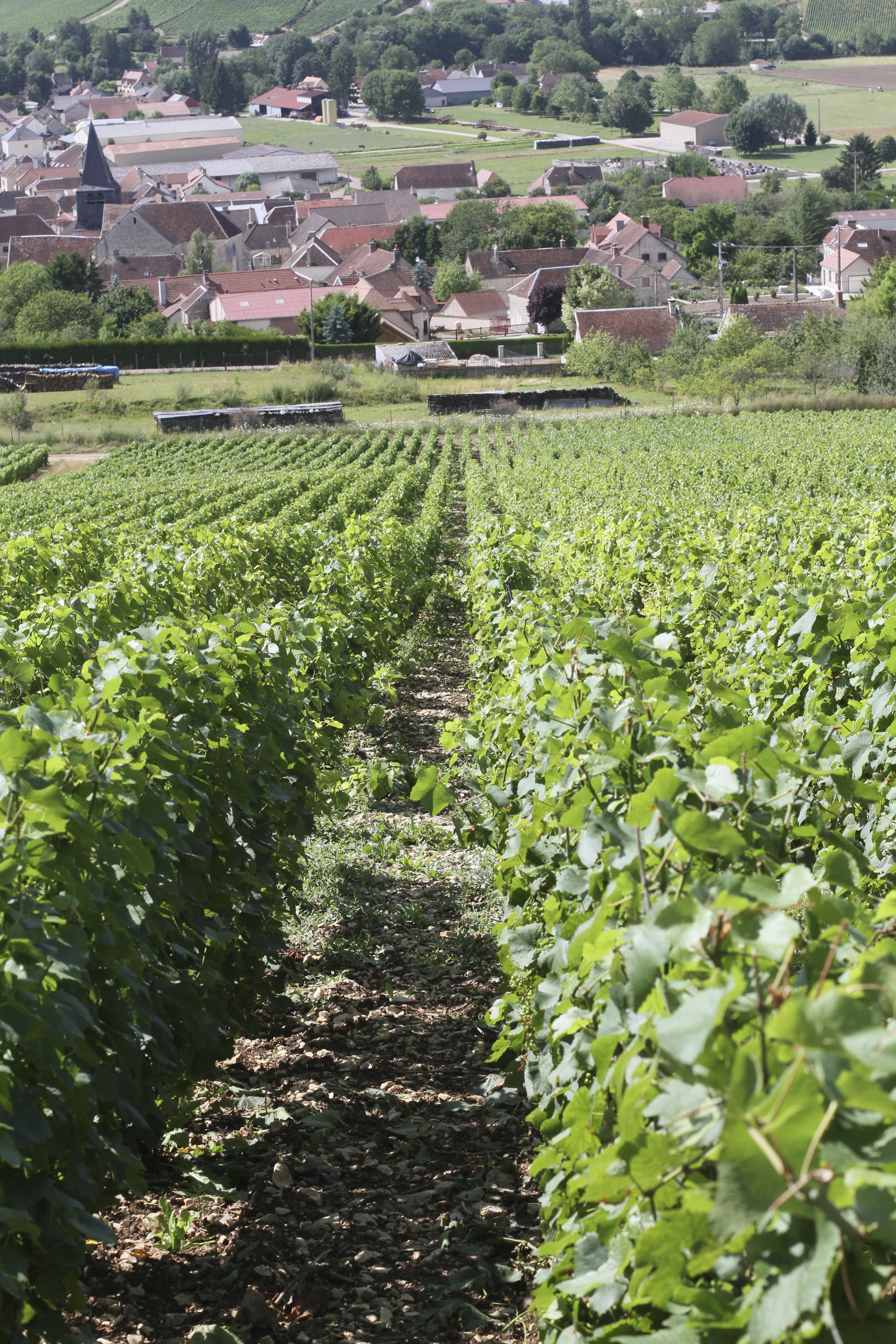
Emmanuel’s vineyards are located in the little village of Villers-Aux-Noeux in the Montagne de Reims on the lieu-dit “Le Mont Benoit”. The single vineyard of 2.5ha is planted with Chardonnay, Pinot Noir and Pinot Meunier and situated on a slope divided in two parts; on the upper level the oldest vines were planted in 1962, on the lower level the youngest in 1984.

The soil is made of silt, clay and chalk. Emmanuel’s approach is artisanal in the vineyards and in the cellar, all the work is done by him and almost entirely by hand. In 2011, the estate was certified organic though Emmanuel has farmed for the last 10 years without any chemicals. As he says the main goal is for the plant to find its balance without stressing it.

In the cellar, he uses a traditional vertical press. It allows him to press with precision some small batches. Only the cuvée is selected and brought to barrique for fermentation which is carried naturally, a small amount of SO2 is added after the malo ends.

In the last few years, Emmanuel was able to select his own ambient yeasts to start the second fermentation with success. All the wines are Extra-Brut and the production is around 7,000 to 8,000 bottles. His main cuvée called Le Mont Benoit Extra Brut is an assemblage of 2 vintages. His wines are really pure, precise and showing minerality combined with ripeness and great pleasure.
The Wines
Champagne · France

Vouette & Sorbée

Côte des Bar · Buxières-sur-Arce
The Estate
AppellationChampagne
GrapesPinot Noir, Chardonnay
Surface4.5 ha
FarmingCertified Biodynamic (Demeter)
vouetteetsorbe vineyard

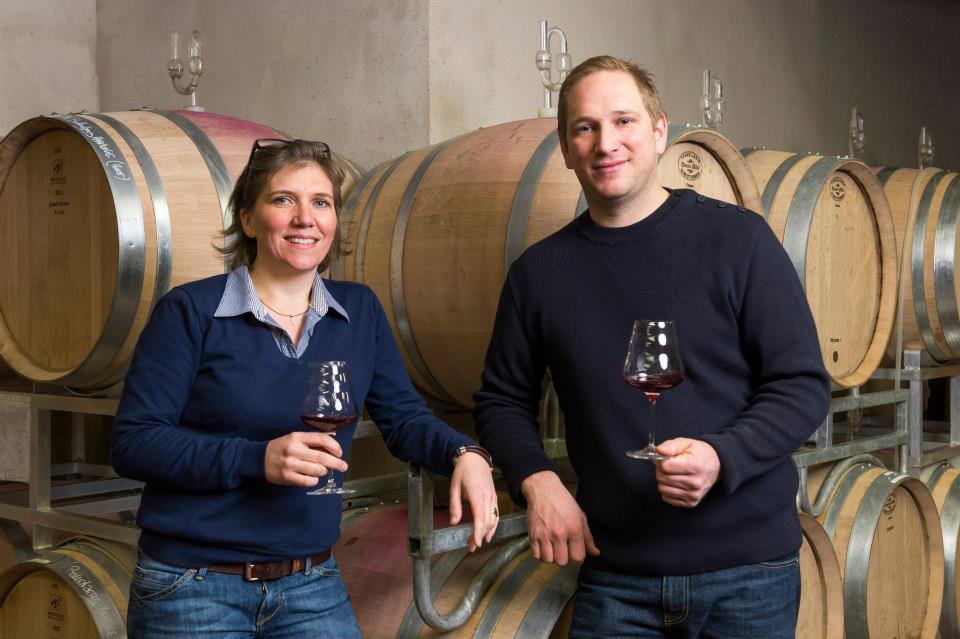
Champagne Vouette & Sorbée is the creation of husband and wife Bertrand & Hélène Gautherot. The Domaine is situated in Buxières-Sur-Arce in the Côte des Bar. Five hectares of Pinot Noir, Chardonnay and Pinot Blanc planted on Kimmeridgian slopes and a small part on Portlandian called Sorbée.

Since 1998, the vineyards are farmed in biodynamie and certified Demeter. For years, the farming has been very mindful of the environment: compost made on the estate, only use of horse or light tractor, fruit trees reintroduced, domesticated cows.

The Champagne is made in an artisanal and natural way since the first release in 2001 of Fidèle. Fidèle is a reminder to remain simple and natural in the cellar: 100% pinot noir, one harvest, only wild yeast, no chaptalization, 100% vinification in oak, 100% natural malo, no dosage. This minimalist approach in the winemaking is the same with Saignée de Sorbée (2003) and Blanc d’Argile (2004).

The Wines
Champagne · France

Laurent Bénard

Vallée de la Marne
The Estate
AppellationChampagne
GrapesPinot Noir, Chardonnay
Surface4 ha
FarmingOrganic
laurentbenard vineyard

The Bénard-Pitois family began their Champagne adventure in 1878 and have been improving the cultivation of the soil and the vine ever since.

Michelle and Laurent Bénard-Pitois, third generation of wine farmers, considered organic farming in the 1990s and carried out the first tests with ECOCERT (international certification) on one hectare of land in 1995. In 2009 the conversion took off and has reached 2.5 hectares cultivated according to the AB specifications. Since 2012, the wine has been organically certified.

Traditional plowing makes the vine root as deep as possible giving access to nutrients. This exchange between the vine and soil makes the grapes richer and adds a delicious balance to the wine.

A natural and static settling allows the wine to maintain a maximum of natural yeast. No sulphites are added and the wines are matured in oak barrels.

The Wines
Champagne · France

Delalot

Vallée de la Marne
The Estate
AppellationChampagne
GrapesPinot Meunier, Chardonnay, Pinot Noir
Surface3.5 ha
FarmingOrganic
delalot vineyard

Jerome is a native of the “Far West” of the Marne valley, at the edge of the Champagne appellation, in the towns of Saulchery, Charly Sur Marne, Bonneil and Crogy. Here Jerome creates Champagne Delalot and Champagne Jerome Lefèvre.

Jerome’s teenage years were guided by a deep passion for heavy metal and the family life of vineyards trained by his mother, Eliane Delalot. Not till several years of working as an art critic and art curator did Jerome’s passion towards the craft of Champagne arise. Elaine’s respectful farming practices became organic certification under Jerome’s direction in 2009.

Inspired by the Fukuoka principals of farming (no tilling, no pesticides, no fertilizer, no weeding, no pruning) Jerome began his journey into winemaking. Since his first harvest in 2013, Jerome has tended to his land like a gardener and grown his vineyards from 1ha to 1.5ha. He does not use any heavy machinery, including tractors. The vineyards are located on slopes facing south and southeast with predominately sandy soil and some clay.

It’s impossible to classify Jerome’s style. Each cuvée comes from specific parcels and are experimental. Pushing the boundaries of Champagne with new techniques while maintaining respect of the terroir.

The Wines
Champagne · France

Thomas de Marne

Côte des Bar
The Estate
AppellationChampagne
GrapesPinot Noir, Chardonnay
Surface3 ha
FarmingOrganic
thomasdemarne vineyard

Thomas De Marne, the son of Valérie Frison, is the second generation of grower and producer of his family based in Ville-sur-Arce, Côte des Bar. After obtaining his wine degree and working at Domaine Yoyo in Banyuls-sur-Mer, Thomas with his partner Florie Pilares moved back to Champagne.

In 2018, he started working with his mother assisting and learning from her in the vineyards and the cellar. In 2020, Thomas became the new owner of the 6ha Domaine and “Thomas De Marne” became the new domaine name.

Most of the estate is composed of Kimmeridgian soil with a small portion of Portlandian. Thomas continues to practice organic farming (established in 2003). As for the winery and the winemaking, Thomas has kept his mother’s practices: grapes are harvested ripe, direct press, native yeasts fermentation and aging in 228L barrels, full malo, the right amount of SO2 when needed. Thomas uses MCR and selected yeasts for the second fermentation and the Champagne are disgorged without dosage.

Thomas recently purchased some new 500L and 600L barrels and is experimenting.

Thomas’s first cuvée is called Holistique, a Brut Nature Blanc de Noirs.

The Wines
Champagne · France

Maison Jérôme Lefèvre

Vallée de la Marne
The Estate
AppellationChampagne
GrapesPinot Noir, Chardonnay, Pinot Meunier
Surface5 ha
FarmingOrganic
jeromeLefevre vineyard

Seeking to further push experimentation, Jérôme Lefevre started a micro-négoce in 2017 called Champagne Jérôme Lefevre. At the far western edge of Champagne’s Marne Valley, Jérôme Lefevre is quietly redefining what contemporary Champagne can be.

A former art critic and curator turned grower-producer, Lefevre farms just 1.5 hectares organically by hand, deeply influenced by the natural farming principles of Masanobu Fukuoka (no tilling, no pesticides, no fertilizer, no weeding, no pruning).

His wines move between two worlds: Champagne Delalot, focused on terroir and precision, and Jérôme Lefevre, a more experimental project inspired by art, music, oxidation, texture.

Production remains tiny, the wines intensely personal, and each cuvée feels closer to an artwork than a formulaic release. Maison Jérôme Lefevre remains one of the most compelling under-the-radar projects in Champagne today — balancing old-vine farming, minimal intervention, artistic instinct, and a refusal to follow trends.

The Wines
Alsace · France

Valentin Zusslin

Haut-Rhin
The Estate
AppellationAlsace Grand Cru Pfingstberg
GrapesRiesling, Pinot Gris, Gewurztraminer, Pinot Noir
Surface12 ha
FarmingCertified Biodynamic (Demeter)
valentinzusslin vineyard

The Zusslin Wine Estate upholds the same winemaking traditions established in 1691. The vineyards are located in the Southern part of Alsace in Orschwir on the Bollenberg, Clos Liebenberg (Monopole) and Pfingstberg Grand Cru hillsides.

Since 1997, the estate is led solely by the principles of biodynamic viticulture in order to re-create a universe suitable for biodiversity. These principles encourage the expression of the soil and environment from Zusslin’s three terroirs. A strict selection of their grapes in the vineyards and at the cellar gives to the wines concentration and elegancy.

Thanks to the terroir, the acidity combined with minerality of their grapes bring depth and great length. The maturing of the wines is carried out on fine lees for a duration of one year to one year and half to express better balance and longevity. There is no interference in the natural process of fermentation and aging of the wines. The vitality, substance & moreover the energy given by the biodynamic viticulture make Zusslin’s wines worth enjoying and drinking.

The Wines
Alsace · France

La Grange de l'Oncle Charles

Haut-Rhin
The Estate
AppellationAlsace
GrapesRiesling, Pinot Gris, Gewurztraminer, Sylvaner
Surface8 ha
FarmingOrganic
lagrangeoncle vineyard

Jerome Francois, trained to be a carpenter, then studied to become a sommelier. From several rows of vines inherited from his grandfather in 2013 and after moving into the family barn belonging to his uncle, a farmer named Charles, Jerome Francois created the winery “La Grange de l’Oncle Charles”.

The Domaine started in early 2014 in Ostheim, Alsace. The vineyards, the meadows and orchards are farmed in biodynamie with the utmost respect for ancestral traditions. All the work is done by hand with the help of two horses and a flock of sheep. In 2017, Jerome was joined by his long time friend Morgane Stoquert who became a partner. Today, they farm 5ha of vineyards located in the towns of Ammerschwihr, Zellenberg, Rodern, Kaysersberg and Riquewihr. Here, grapes are planted in co-plantations and produce on average 25hl/ha.

Jerome and Morgane believe that wine can purely express itself from its terroir. It is up to the vigneron to work with minimum intervention or none, as they prefer. The wines are all made naturally with no fining or filtration. All the cuvées are made from field blends. Recently, the wines of the Domaine were not given authorization to be designated AOC Alsace and thus became Vin de France. They now bear the name of the translated lieu-dits.

The Wines
Beaujolais · France

Domaine Aux Ardents

Brouilly
The Estate
AppellationFleurie, Moulin-à-Vent
GrapesGamay
Surface6 ha
FarmingOrganic
auxardents vineyard

Domaine Aux Ardents was introduced to me by a close friend who runs the renowned bouchon Le Mercière in Lyon — a restaurant deeply rooted in Brouilly.

After tasting the first samples in early 2025, I traveled to the region to meet the winemakers. The estate is owned and run by a husband-and-wife team, Mylène (a lawyer) and Thomas (a car mechanic). Both are natives of the region, though neither came from the wine world. In 2019, driven by curiosity and a shared vision, they decided to take the leap and create Domaine Aux Ardents.

The winery is based in Brouilly, with approximately 80% of the vineyards located around their house in Brouilly, and the remaining 20% in Marchampt, Brouilly-Villages. The total vineyard surface is 2.2 hectares.

The estate has been farmed organically since its inception and officially certified in 2022. Beyond organic farming, Mylène and Thomas are committed to increasing biodiversity by planting trees — almond, cherry, chestnut, and fig — and by installing beehives throughout the vineyards, creating a living, balanced ecosystem.

This attention to terroir continues through a philosophy of minimal intervention: hand-harvested grapes, gentle pressing in a horizontal wooden-cage press, native yeast fermentation, and no added sulfites until bottling.

The Wines
Bordeaux · France

Domaine Uchida

Haut-Médoc · Cissac-Médoc · Pauillac
The Estate
AppellationHaut-Médoc
GrapesCabernet Sauvignon, Merlot, Carménère, Sauvignon Blanc, Sauvignon Gris
Surface2.5 ha
Production8,000–10,000 bottles
FarmingCertified Organic & Biodynamic
uchida vineyard

Born in Hiroshima Japan in 1977, Osamu Uchida grew up with parents who owned a wine shop and a rice-farmer grandfather. The family heritage as farmers and wine merchants inspired Osamu’s passion for France and its vineyards. His dream of making wine led Osamu to move to France in 1999 to study viticulture and oenology in Bordeaux. When studies ended in 2001, Osamu continued his studies at several wineries in the Côte-Rôtie at Clusel-Roch, in Banyuls at Vial Magnere, in Bordeaux at L’Arrivée Haut-Brion and several more vineyards in the Loire and Savoie.

In 2006, Osamu returned to Japan with the aim of saving money to fulfill his next dream of making his own wine. After searching for a long time, he found a small and isolated plot in Bordeaux Cissac-Médoc. Why Bordeaux? “Everyone was telling me don’t go to Bordeaux, anywhere else is great. So I decided to explore Bordeaux. Then people advised me ok if you go to Bordeaux go to the right bank not the left bank. So I settled in Pauillac on the left bank.”

In 2015, Osamu started with 0.6ha of 30 year old Cabernet Sauvignon planted on 15 inches of sandy top soil followed by clay and limestone soil. This soil allows the grapes to ripen with balance at a low level of alcohol. Prior to Osamu this vineyard was farmed without chemicals. It is isolated and surrounded by a forest. Since purchase, Osamu has meticulously farmed organically since 2015 and since 2019 in biodynamie. From this parcel comes the cuvée called Miracle. Today, he oversees 2.4ha of biodynamic vineyards, 5 plots in the Haut-Médoc. The total production is between 3,000 and 5,000 bottles.

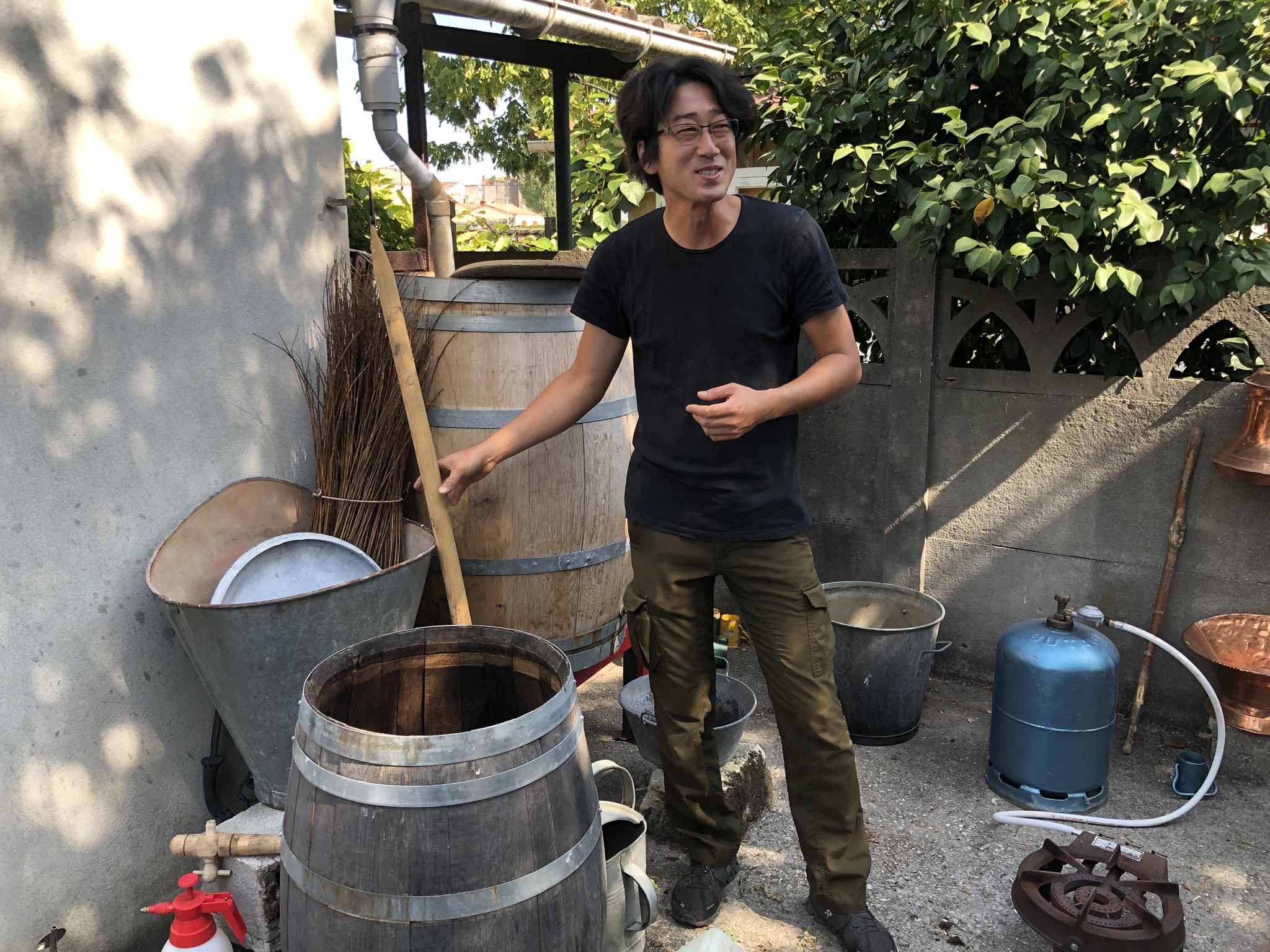
His home located in Pauillac is about 100 yards from Mouton-Rothschild. When you enter, there is a Japanese heritage present. The crest of his family is at the entrance, there is a beautiful mini orchard with a diversity of plants, trees, flowers, horsetail, tomatoes and fresh herbs. There is a wooden tank to collect rain water to prepare biodynamic tisane or dynamization. Two chickens called Grasse and Grise (Big & Grey) run about. Inside one of his huts, two barrels of homemade soy sauce is fermenting.

Inside the garage is a petite cellar. When the grapes arrive they are all de-stemmed by hand and delicately brought to a large wooden tank where the berries will macerate for 2 weeks at cool temperature. They are pressed and part of the juice will ferment and age for one year in terracotta and 500L used oak barrels. There is no filtration or fining. Finally, the vinification is carried out with wild yeasts and the wine is sulfured at a minimum level before bottling. The wines of Osamu are all about finesse, elegance and drinkability.

Bordeaux is changing and the quality is rising. Among a few adventurous winemakers, Osamu Uchida’s approach and unique wine makes Osamu one of the new, exciting faces of the region.

The Wines
Bourgogne · France

Pierre-Henri Rougeot

Côte d’Or
The Estate
AppellationBourgogne, Côte d’Or
GrapesChardonnay, Pinot Noir
Surface5 ha
FarmingOrganic
pierrerougeot vineyard

Introducing Pierre-Henri Rougeot’s boutique production from organic vineyards in Volnay, Côte d’Or, Pommard and Gevrey. 2017 is Pierre-Henri’s first vintage, partly whole-cluster, wild yeasts fermentation, no SO2 until bottling, no fining and no filtration.

Pierre-Henri Rougeot is a young vigneron with generations of family roots in the town of Meursault. He grew up learning farming and the craft of winemaking with his father and by studying in Beaune.

In 2017, he decided to add one more activity, a small négoce where he could make wines his way. The fruits come from his family estate, vineyards which are farmed organically. The production is really small, one barrel here of one cuvée, two over there, max 4 barrels of Gevrey. Pierre-Henri makes his wines with little intervention meaning no SO2 until bottling, no fining and no filtration, the reds are macerated with whole-cluster and age in neutral barrels, the whites are pressed directly in barrels, no bâtonnage and aging sur lees. 2017 was a great vintage and his first.

The Wines
Jura · France

Les Coteaux du Val de Sorne

Le Revermont
The Estate
AppellationCôtes du Jura
GrapesSavagnin, Chardonnay, Poulsard, Trousseau, Pinot Noir
Surface7 ha
FarmingOrganic
coteauxdusorne vineyard

Jean-François is the 14th generation of vignerons located in the village of Le Revermont. He started in 1987 and released his first wines in 1992. The small estate has a surface of 2.68ha (Poulsard, Savagnin, Trousseau and Chardonnay). He has always farmed organically and the Domaine was certified in 2003.

The village of Le Revermont is situated in a secluded area South of Lons-le-Saunier at the end of the valley of the Sorne and surrounded by scenic hills. The vineyards are on slopes going up to 300m elevation. The soil is composed of marl from the Jurassic and Triassic period. Until the French Revolution, the vineyards of Le Revermont were part of an ancient estate that belonged to the abbey of Saint-Claude and were among the largest area of production in the Jura.

In the cellar, which is within the village in a 17th-century building, the work is done with minimum intervention, without additives of any sort and minimum to no SO2 used.

Jean-François is an exciting person to know — he has tremendous culture, combined with a sharp mind and a sarcastic humor. He is an historian by training and still practices to this day. A side note about the label of his wines: it depicts Saint Vernier who was the patron saint of the vintners during the Habsburg period. On this picture found in a local church you see him harvesting Poulsard.

The Wines
Jura · France

Domaine La Patelle

Arbois
The Estate
AppellationArbois, Côtes du Jura
GrapesSavagnin, Chardonnay, Poulsard, Trousseau
Surface5 ha
FarmingOrganic
lapatelle vineyard

Pascal Thereau is an up-front, young, and sincere person — he tells you like it is and the wines are as such transparent and alive. For many years, he spent his professional life in the art of sourcing wood and crafting barrels. In 2018, he started part-time studying in Beaune and working at Domaine André et Mireille Tissot with Stéphane as his mentor.

In 2021, Pascal made his first cuvée “Coup de Feu” a 100% Chardonnay from a tiny 1-acre parcel in Arbois called “La Régole”. In 2022, he obtained several parcels from Tissot and Domaine les Bodines.

Today, in addition to the parcel “La Régole” the estate consists of 6ha of various lieu-dits: “Les Tourillons” is situated above the village of Arbois, 4.3 acres in elevation and planted with Savagnin and Chardonnay, the soil is made of limestone. “Les Bodines” 8 acres of mostly clay and limestone soil planted with Pinot Noir, Poulsard, Savagnin and Trousseau. “Les Corvées” 0.5 acre planted with Chardonnay on red marl.

Pascal farms his vineyards organically and has been certified since 2023. Regarding winemaking, minimum intervention prevails, all the reds spend time in tanks to keep a fruit-forward style, while the whites ferment in barrels and are aged in wood, amphoras, concrete, or wood tank. The winery is called La Patelle, named after a Kiosque located in the lieu-dit Les Tourillons and made in the form of patella shells. This abandoned small roof stall was recreated and built by Pascal on his winery.

The Wines
Loire Valley · France

Benoît Courault

Anjou · Faye d'Anjou
The Estate
AppellationAnjou, Anjou Villages
GrapesChenin Blanc, Cabernet Franc, Gamay
Surface8 ha
FarmingBiodynamic
benoitcourault vineyard

Benoit Courault is a young and established vigneron in Faye d’Anjou, a little village south of Angers along the Layon river. Not a son of a winemaker, early on, Ben decided to study wine. He went to Beaune. From 2003 until 2006, he worked with the famous vigneron Eric Pfifferling from Domaine L’Anglore in Tavel.

Back to his native Loire, he found 5ha of vineyards and started his estate in 2006. Benoit’s aim is to propose authentic wines of excellent quality produced with a constant concern for the natural balance of life cycles, a statement that you will find on his label “Vignes cultivées dans le respect du vivant”. Ben’s practices are simple and traditional: organic farming, use of the horse, natural vinification, very little use of sulfites, no fining and no filtration.

The Wines
Loire Valley · France

Paul Cherrier

Sancerre
The Estate
AppellationSancerre, Menetou-Salon
GrapesSauvignon Blanc, Pinot Noir
Surface10 ha
FarmingOrganic
paulcherrier vineyard

One of our original producers in the portfolio, Stéphane Cherrier is a young and talented producer who took over the family vineyard and started the winery in 2006. It is composed of 13ha located in the area of Verdigny with 10ha of Sauvignon Blanc and 3ha of Pinot Noir. The soil is both made of clay-limestone on the plateau and white marl on the slopes.

Stéphane, a humble & welcoming vigneron, practices organic and minimal intervention winemaking. The wines of Stéphane show ripeness and liveliness which set them apart from the massively produced wines. The whites tend to show tropical fruit with a vibrant mouthfeel while the reds are fruit forward and refreshing.

The Wines
Loire Valley · France

La Porte Saint Jean

Saumur
The Estate
AppellationMuscadet Sèvre et Maine
GrapesMelon de Bourgogne
Surface9 ha
FarmingOrganic
laportesaintjean vineyard

Sylvain Dittiere, nicknamed “TonTon”, grew up in Saumur where his parents were growing roses. After studying oenology, he interned with Gerard Gauby, Marc Tempe, Thierry Germain and Antoine Foucault.

Upon returning to the Loire in 2010, Sylvain started La Porte Saint Jean. He was able to find a vineyard in Saumur that was organically farmed and yields that were no more than 40hl/ha. The Cabernet Franc is planted on sand, silt, clay with a subsoil of limestone. From this parcel, he crafts two cuvées; La Porte Saint Jean & Les Beaugrands. Recently, Sylvain added 2 more vineyards; Les Cormiers planted with Cabernet Franc in the AOC Saumur and his white parcel planted with old vines of Sauvignon Blanc and Chenin Blanc respectively called Saut Mignon and La Perlée.

Sylvain makes no concessions; the work in the vineyards is intense and precise to reach each year’s ripeness and balance. Detail-oriented “TonTon” makes a strict sorting. In terms of vinification, all natural with a bit of SO2 at the end, bottled without filtration or fining, the aging takes place in a combination of used barrels from Bordeaux, Burgundy and the Rhône.

Clearly within a few years, Sylvain has become one of the most talented vignerons in the region.

The Wines
Loire Valley · France

Les Grandes Vignes

Anjou · Layon Valley
The Estate
AppellationAnjou, Coteaux du Layon
GrapesChenin Blanc, Cabernet Franc
Surface35 ha
FarmingBiodynamic
lesgrandesvignes vineyard

Since the XVII century, located in the village of Thouarcé in Anjou, the Vaillant family has passed on farmland from generations to generations. For the last ten years, sister and brothers have cultivated the estate using the biodynamic principles. The goal is to express the personality of each wine.

55ha of vines of Chenin Blanc, Cabernet Franc, Grolleau and Pineau d’Aunis are planted. The diversity of their cuvées is due to the different type of soils and exposures found: schist sandstone, quartz, gravel, and clay. Almost all of their wines are made with no addition of SO2, neither filtered or fined.

The Wines
Loire Valley · France

Domaine des Frères

Chinon · Beaumont-en-Véron
The Estate
AppellationChinon, Vin de France
GrapesCabernet Franc, Chenin Blanc
Surface11 ha
Production45,000 bottles
FarmingOrganic
domainedesfreres vineyard

Domaine des Frères was created by two brothers, Henri and Valentin. They grew up near Chinon and both became engineers. After several years working in the fields of engineering they both realized that they were not fit to stay in an office.

Passionate about wine, Henri was the first to change course. In 2013, Henri went back to school in Bergerac and obtained a degree in viticulture and oenology. He began his Tour de France in the South West, Loir et Cher and Touraine. Henri’s most impactful experience was his time spent with Patrick Corbineau, who became his mentor. In 2015, Valentin followed and graduated from a school in Mâcon. Valentin’s first work study began with Yvon and Jules Métras. He also worked with and learned from other excellent wine producers such as Philippe Chigard and Bernard Baudry.

After looking for two years, in October 2019, Henri and Valentin took over a unique estate in Beaumont-en-Véron comprised of 27 acres planted with vines between 35 and 50 years old and located on a hillside containing 7 different and distinct terroirs. The property also includes a beautiful wine cellar cut into the local tuffeau limestone.

The farming is organic with precise and thoughtful tisanes, harvest is done by hand and picked very early in the morning so the grapes arrive cold. In just a few harvests both brothers have gained a quick reputation in France for wines that are pure, crunchy and deeply expressive of their terroir.

The domaine consists of 11ha divided into seven parcels: Le Pérou, Les Picasses, Les Moulins de Beau Puy, Les Pucelles, La Roche Bobreau, Les Puys and Les Chaineaux. All the vines are planted on slopes and 80% of them are from massale selection. They rely a lot on observation and produce homemade tisane treatments such as fermented compost tea. They trim the vines only once per year — this technique provides each vine with a maximum number of leaves, aiding photosynthesis and improving the aromatic complexity of the fruit. All the wines are made based on their terroirs with the idea of minimum intervention with precision.

The Wines
Loire Valley · France

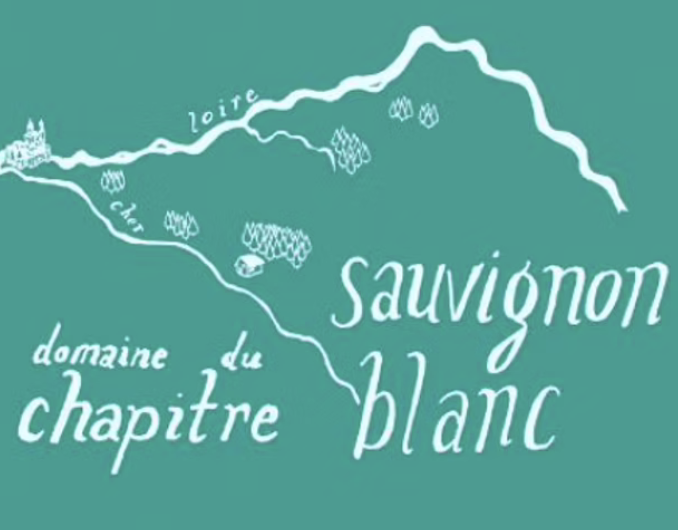
Domaine du Chapitre

Touraine
The Estate
AppellationTouraine, Vin de France
GrapesGamay, Côt, Sauvignon Blanc
Surface8 ha
FarmingOrganic
domaineduchapitre vineyard

The Domaine du Chapitre is managed by siblings Maryline and François Desloges. The vineyard is based in Saint Romain sur Cher (Loir and Cher) in the Loire Valley and was founded at the beginning of the XIX century by their ancestors. At that period of time, farmers used to cultivate cereals, raise cattle, and plant vines for local consumption.

François made his first vendange in 1982 and Maryline joined the vineyard a couple of years later. As 5th generation winemakers, their aim is to produce high quality wines reflecting the specific terroir of Touraine and Touraine Chenonceaux. The team is also comprised of François’s son Valentin, a 6th generation winemaker. Valentin is in charge of the vineyard and the winemaking with his father. He returned to the domaine after working for renowned producers: Vincent Sipp in Alsace, Todeschini Family at Château Mangot in Saint-Émilion, Thierry et Paul Pillot in Chassagne-Montrachet and Raphaël Coche at Coche-Dury in Meursault.

The Domaine du Chapitre manages 28 hectares of vines (15–45 year old vines) in two AOP: Touraine and Touraine Chenonceaux, both on the bank of the Cher river. The terroir is made of different soil types amongst the three towns where the vineyards are planted. Sand with flint is dominant on the bank side of the Cher river while clay and limestone is found further North. The vineyards are at an altitude of 120m with an oceanic climate of fresh, cooling winds coming from the west.

The Domaine du Chapitre has been practicing sustainable farming for many years and began the organic certification process in 2022. The grapes are picked and sorted at the winery in Saint Romain sur Cher. Yields are between 35 and 45hl/ha. A pneumatic pressing machine is used for all the wines. The wines are lightly filtered and sulfur is added in low quantity before bottling.

The Wines
Provence · France

Domaine Milan

Les Baux-de-Provence · Alpilles
The Estate
AppellationLes Baux-de-Provence, Vin de France
GrapesGrenache, Syrah, Mourvèdre, Clairette, Rolle
Surface20 ha
FarmingCertified Biodynamic
domainemilan vineyard

Nestled at the foothills of Les Alpilles the story of Domaine Milan started in 1955. In 1986, Henri Milan took over with the ambition of making the best possible wine with respect to the environment. The Domaine includes 10 ha planted with Grenache, Syrah, Mourvèdre, Cinsault, Grenache Blanc, Chardonnay, Roussanne, Rolle and Muscat.

In the mid 90s, his encounter with Claude Bourguignon (famous microbiologist) and Claude Courtois (Domaine Les Cailloux du Paradis) helped and convinced him to further enhance the identity of his great terroir and ameliorate his winemaking.

Since 2000, Henri has made wine based on their origins — blue marl on limestone and yellow sandstone. The reds such as Le Papillon or Le Clos have gained in elegance and freshness thanks to shorter macerations with whole clusters and natural vinification. The famous cuvée Grand Blanc, his blend of all his white grapes, shows more tension and salinity.

The Wines
Rhône Valley · France

Gourt de Mautens

Rasteau
The Estate
AppellationRasteau, Côtes du Rhône Villages
GrapesGrenache, Syrah, Mourvèdre, Carignan, Cinsault
Surface18 ha
FarmingBiodynamic
gourtdemautens vineyard

Gourt de Mautens was created in 1996 in Rasteau. Jerome Bressy, the vigneron, was only 23 when he made his first vintage in a converted hangar on his parent’s farm. In 1989, Jerome’s father decided to convert the vineyards to organic farming but the grapes continued to be delivered to the coop. At that time, the switch in farming method was not easy, especially for a grower in a coop, but this sacrifice allowed Jerome to begin with a healthy vineyard.

The Gourt de Mautens estate covers 13ha of vines. The vineyards have been organically farmed since 1989 (Ecocert certified) and biodynamically farmed since 2008 (Demeter certified).

The plots are situated on terraces, hillsides facing north-west and south-west. The soil is made of chalk, clay and marl. The vines are between 30 to 100 years old and produce very low yields of 10 to 15hl/ha. The vineyards are planted with a wide variety of grapes: Grenache Blanc & Gris, Picardan, Picpoul Blanc & Gris, Clairette, Grenache, Syrah, Counoise, Carignan, Vaccarèse, and Terret Noir.

In 2012, Jerome decided to leave the appellation. After the Rasteau new classification in 2010, the AOC decided the exclusion of Picardan and required that “minor” varietals should not be more than 15% of any Rasteau blend. Jerome’s wines since 2010 have been labeled IGP Vaucluse.

The Wines
South West · France

Mouthes le Bihan

Côtes de Duras
The Estate
AppellationCôtes de Duras
GrapesMerlot, Cabernet Franc, Sauvignon Blanc, Semillon
Surface30 ha
FarmingBiodynamic
moutheslebihan vineyard

Mouthes Le Bihan’s winery is located in the Côtes de Duras, an appellation situated in between Bergerac, l’Entre-Deux-Mers and the Marmandais. It is a small appellation of 2,000 ha where the Bordeaux grapes thrive alongside Chenin Blanc.

The lovely proprietors, Jean-Mary and Catherine le Bihan are farmers. Today, they organically grow cereals, sunflowers and raise Arabian horses. They own 27 ha of vines spread in many different parcels. Their first vintage was in 2000.

The goal is to make honest wine as naturally as possible. Therefore, all the efforts are centered on the vineyards: old vines, managed yields, plowing of the soil, no chemicals (except copper and sulfur), manual harvest in small baskets, and strict sorting.

The estate is certified organic and going through biodynamic certification. In the cellar there is minimum intervention, only indigenous yeasts, and no other entrants except SO2 at bottling.

The Wines
Italy

Tenuta La Novella

Greve · Tuscany
The Estate
AppellationIGT Toscana, Chianti Classico DOCG
GrapesSangiovese, Syrah, Canaiolo, Trebbiano, Malvasia, Moscato
Surface12 ha
FarmingOrganic
tenutalanovella vineyard

A family estate in the Maremma, Tuscany's wild coastal zone, farming organically on galestro and clay soils. The Sangiovese has the freshness and energy this variety achieves in few other places. The Vermentino is one of the most compelling whites from Tuscany — coastal, saline and precise.

The Wines
Franciacorta · Italy

Nicola Gatta

Gussago · Lombardia
The Estate
AppellationGussago · Lombardia · Lombardia DOCG
GrapesChardonnay, Pinot Nero, Pinot Bianco
Surface8 ha
FarmingOrganic
nicolagatta vineyard

Nestled in the hills of Gussago · Lombardia overlooking the Po valley sits the artisan vigneron Nicola Gatta and his winery. For the last 3 decades, Nicola has been one of the few winemakers changing the face of Italian traditional method sparkling wines in his region. For Nicola, everything starts in the vineyard — the understanding of the soil, altitude, exposure, rootstocks, grapes inform the farming and time of harvest.

The estate consists of 4 main crus situated high in elevation, in an amphitheater with two additional lieu-dits coming.

Campiani: 2 parcels: one faces East planted with 32 year old Pinot Noir, on 220 million year old soil made of clay rich in iron with a calcareous subsoil. The West facing parcel is planted with 80% Chardonnay and 20% Pinot Noir, same soil type.

Cudula: In the heart of the amphitheater, the cru is divided into a West & East parcel. The age of the soil is 150 million years old and made of a clearer clay with more loose limestone. According to Nicola there is a great amount of cation in this soil along with a small amount of gypsum supplying acidity and sapidity.

Sabina: Planted with Pinot Noir, 12 years old vines, facing North/Northwest. The presence of gypsum and limestone is very high and the clay has a clear color. Because of the northern exposure, the grapes tend to be more acid driven and key to use in blends.

Civine: A new project adaptation to climate change; located behind the amphitheater, 650M high in elevation. Limestone soil rich in basalt. Colder temperatures in the winter but also drastic day/night changes during the summer. 80% Pinot Noir and 20% Chardonnay.

Gatta’s winemaking is with no intrants, all indigenous yeasts, full malo, aging in a variety of well-chosen casks. In addition, the metodo classico is carried out without the addition of SO2, only autochthonous yeasts via a meticulous selection of dried grapes. The wines undergo a long period of maturation expressed in moons rather than months.

The Wines
Spain

Art Laieta

Alella · Catalunya
The Estate
AppellationDO Alella
GrapesPansa Blanca (Xarel·lo), Pansa Rosada, Syrah, Merlot
Surface14 ha
FarmingCertified Biodynamic (Demeter)
altaalella vineyard

Art Laieta is a family-run project which started more than twenty years ago by the enologist Josep Maria Pujol-Busquets and his wife Cristina Guillen. Art Laieta is the closest winery to Barcelona (10 km), located within the agricultural area of a natural park known as the “Serralada de Marina”. The estate is just two km away from the Mediterranean Sea and the vineyards are planted on slopes and terraces between 100 and 250 meters above sea level.

The vines are grown on Sauló soil which is one of the most important elements that determines the character of wines from Art Laieta: an acidic white granite-based sand with low limestone content, low organic matter and good drainage.

Fleeing from standardization, year after year, Josep Maria’s aim is to produce ‘transparent’ wines that reflect soil and vintage characteristics. The harvest is carried out by hand, paying individual attention to each plant.

Currently Art Laieta farms 60 ha within the D.O Alella (the smallest D.O. in Spain) and the D.O. Cava. The winery works with micro-vinifications, many different grape varieties and innovative techniques, producing up to 50 different wines every year. The cava ages on the lees between 15 and 60 months and is released on the market just after being disgorged — the disgorgement date appears on every bottle.

The Wines
Spain

Celler de Les Aus

Alella · Catalunya
The Estate
AppellationDO Alella · Catalunya
GrapesXarel·lo, Garnatxa Blanca, Ull de Llebre
Surface6 ha
FarmingOrganic
cellerdelesaus vineyard

Celler de les Aus is part of the winery Art Laieta. Starting in 1992, the family winery farmed organically (certified) from inception and is now led by Josep’s daughter Mireia Pujol-Busquets. Art Laieta’s winemaking practices incorporate understanding and adapting in a sustainable way to the present and future impacts of climate change. For example, the family has a natural seed study and selection practice which discovers the most resistant seeds to mildew and drought.

In the early 2000s, Josep partnered with a friend to craft a Cava made with no addition of external yeasts, no external sugar, and no addition of SO2. A Natural Cava. This was accomplished by using the must of Pansa Blanca (Xarel-lo) for the second fermentation. At first the wine was called NU. Many years later, the name changed to Bruant which is the name of a local bird. All of Celler de les Aus’s wines are named after the birds that live in the Serralada de Marina’s Natural Park.

The process of making wine without addition of SO2 was new for Josep. He began with Pansa Blanca and named the wine Tallarol. Years later, Celler de les Aus & Art Laieta separated to demonstrate that the wines were made in different locations and did not influence each other.

Today, Josep and Mireia produce a few cavas: Capsigrany made with a rare varietal Pansa Rosada (there are only 5ha left of Pansa Rosada in the world), Merla made with the grape Mataró and a pétillant naturel called “Aus”.

The Wines
Galicia · Spain

Fento

Rías Baixas
The Estate
AppellationDO Rías Baixas
GrapesAlbaríño, Caíño Tinto, Brancellao
Surface3 ha
FarmingOrganic
fento vineyard

Fento Wines was created in August of 2012 by wife and husband team Rebecca and Eulogio Pomares (Bodega Zarate). It is a young, family business that makes wines reflecting the strength of the grapes and their nuances and comes with a new focus and presentation. Fento Wines is a personal project which combines natural viticulture with new techniques.

Regarding farming, they work with local Rías Baixas grape varieties, giving great importance to the grape-earth-climate-winemaker aspects. Recently, they have gone beyond the natural border by co-existing with the Portuguese Dão designation. They count on the assistance of small growers, something which is vital if you want to achieve rational work that respects the environment. Many vines use spontaneous cover crop to obtain more concentrated grapes, to improve the soil’s structure and avoid erosion.

Fento Wines sources grapes from Galicia in the South of Pontevedra, in the Condado de Tea area. Grapes are planted in the “Xabre” soil, a popular name for weathered sandy granite soils. These vines use the pergola or vine training system. The white varieties are Albaríño, Treixadura, Loureiro, Godello and Torrontés; and the reds are Susón, Espadeiro and Pedral.

The Portuguese grapes come from Quinta da Pellada, owned by Alvaro Castro, where vines are between 3 to 70 years old. The local varieties are the Alfrocheiro, Jaen and Baga. The harvest is done by hand with a very strict sorting carried out on the vines.

The Wines
New York · USA

Nathan K.

Finger Lakes · Seneca Lake
The Estate
AppellationFinger Lakes AVA
GrapesRiesling, Pinot Noir, Cabernet Franc
Surface4 ha
FarmingOrganic
nathank vineyard

Nathan K. wines was founded in 2011 by Finger Lakes native Nathan Kendall. He is an internationally trained winemaker who has experience in Sonoma, Willamette Valley, Waipara (NZ), Adelaide Hills (AUS), and Mosel (GER). Nathan’s plan was always to return to the shores of Seneca Lake and create wines in an old world style using quality grapes and minimal intervention.

Having traveled throughout the world focusing on cool climate regions and varietals, Nathan’s focus is on Riesling and Pinot Noir. All lots are carefully sorted and the pristine fruit then undergoes long spontaneous fermentations. Post fermentation, the wine ages for months on the gross lees to enhance the texture. Wines are then carefully racked, never fined, and gently filtered before bottling. The bottled wines evolve for 2–3 years before release to achieve the best possible expression of the Finger Lakes.

The Wines
New York · USA

chëpìka

Finger Lakes
The Estate
AppellationFinger Lakes AVA
GrapesRiesling, Cabernet Franc, Blaufränkisch
Surface3 ha
FarmingOrganic
chepika vineyard

The Finger Lakes wine industry began around 1820 when native North American grape varieties thrived. By 1860 the first bonded winery in America was founded in the village of Hammondsport on Keuka Lake. The sparkling and fortified wines made from the native varieties commanded great respect throughout the world. Because of prohibition — along with changing tastes and the introduction of European grape varieties — the wines produced from the native, or “vitis labrusca” grapes, soon became a distant memory.

The chëpìka project asks, why not now? The name chëpìka comes from the Lenape word for “roots”. Lenape was the language spoken by the Delaware tribe of Native Americans. The Delaware grape variety was a major component of the world-renowned sparkling wines that emerged from the region in the 1800s, along with the Catawba grape, and others. A century and a half ago they were some of the most prized cultivars of northeastern North America. These grape varieties are currently used predominantly in the mass production of sweet table wines and fruit juices.

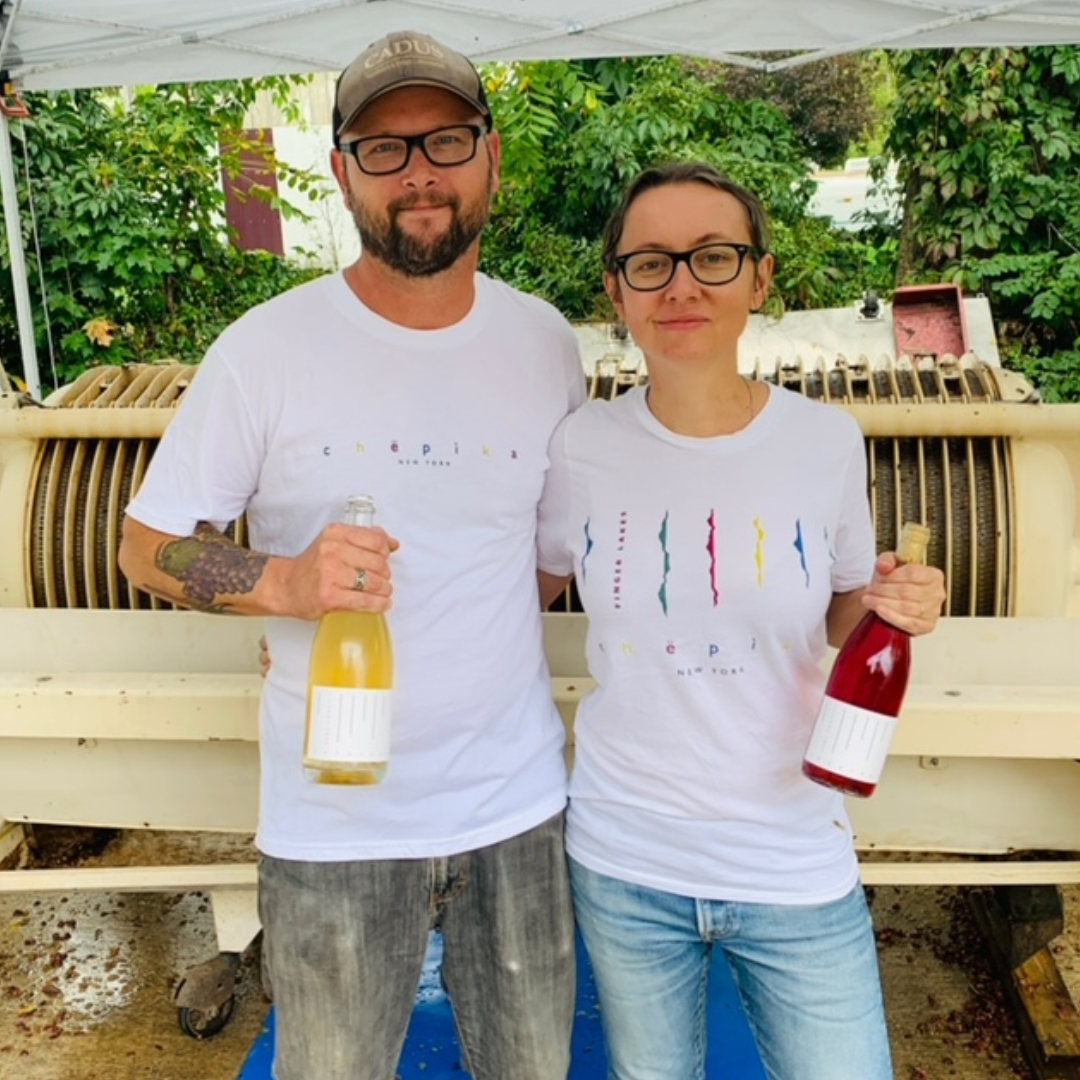
Chëpìka is the project of winemaker Nathan Kendall and Pascaline Lepeltier MS, beginning with the 2016 vintage. The chëpìka sparkling wines are crafted in the ancestral method, relying exclusively on natural yeasts while keeping total sulfur under 10ppm. The Delaware and Catawba grapes are grown organically and the wines are created without the use of modern technology.

The goal of the project is to work diligently and respectfully with the land, using the native varieties to recreate the traditional wines of the Finger Lakes, and to produce a delicious, affordable, local wine made from the natural and historical resources of the region.

The Label: Pascaline and Nathan created a label that represents the Finger Lakes region in a modern and minimalist style. Designed by Wendy Wilmoth, the 5 horizontal lines represent the 5 Finger Lakes.

The Wines
USA

Outward Wines

Central Coast · California
The Estate
AppellationWildhorse Valley AVA, Sonoma Coast AVA
GrapesPinot Noir, Chardonnay
Surface6 ha
FarmingOrganic
outward vineyard

Natalie Siddique and Ryan Pace started Outward Wines in 2016 to share their love of Syrah and the Central Coast of Central Coast California. Partners in life and in business, Natalie and Ryan are incredible rock climbers (El Capitan in 15 hours!) and avid travelers who love to explore wine regions the world over. They bring that focus and inspiration to their winemaking and have created a unique and surprising portrait of Central Coast wine.

Since that first vintage Outward has grown to use 10 different grape varieties from coastal sites spanning Central Coast California, Santa Barbara, and Monterey counties. Each wine is single variety and single site, making Outward one of the most terroir-focused wineries in the area. Diverse places like Shell Creek Vineyard in Paso Robles (some of the first vines in Central Coast County, planted 1971) to biodynamic practicing hillside Bassi Vineyard near Avila Beach and ancient sand dunes turned vineyard Presqu’ile in Santa Maria Valley are just a few of the snapshots of the county from Outward.

Most of the vineyards they source from are practicing or certified organic. Natalie and Ryan are supporting other growers through their certification process and encouraging them through the farming transition, part of their long-term goal to bring more organic farming to the area. The vineyards range from 200 to 1500ft and include marine-based soil types, mostly sandy loam. All wines are made in neutral oak barrels, are unfined, and unfiltered.

The Wines